

The VLCC market reached a new milestone in the third quarter of 2026, with the TD3C benchmark moving above $1 million per day for the first time in history. Rates had already been at exceptionally strong levels since the outbreak of conflict in the Middle East, but through July, August and September the market tightened further as disrupted crude flows absorbed more vessel time and Chinese buying returned.
What has made this market particularly unusual is that the strength has not simply been a function of higher cargo volumes. The way crude is moving has become much less efficient, increasing the number of vessel days required to transport broadly the same barrels.
Middle East flows find a new rhythm
In July, the market was still trying to establish how Middle Eastern exports would operate under the Hormuz constricted trading environment. There was briefly some optimism that more normal loadings from inside the Arabian Gulf could resume, prompting a number of vessels that had started ballasting west to turn back towards the region. Renewed hostilities quickly changed that picture, and owners willing to trade in the area continued to demand significant premiums. Alternative loading locations for Middle Eastern crude, such as Sidi Kerir in the Mediterranean, also became increasingly important.
By August, some of these alternative trade routes had become a much more significant part of the market. Tankers International fixture data recorded 15 VLCC loadings in the Mediterranean during August, compared to a more normal monthly level of just one or two. All the additional cargoes were heading to Asia, which meant that Middle Eastern crude loading in the Mediterranean and sailing around the Cape of Good Hope, would take 50 days to reach China. This is compared to sailing time of around 20 days when going directly from the Arabian Gulf.
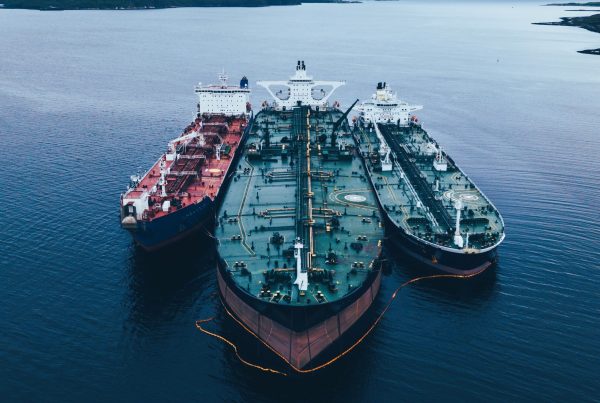
At the same time, Middle Eastern suppliers are beginning to establish a more workable system for moving barrels originating inside the Arabian Gulf. Crude is increasingly being shuttled to locations outside the Gulf before being transferred ship-to-ship onto another vessel for the final voyage east. The system allows crude to keep moving, but from a tanker supply perspective it is highly inefficient.
We estimate that the shuttle and STS process adds around 10 vessel days compared with a normal Arabian Gulf-China movement. With around 45 Arabian Gulf cargoes loading for China in September, that represents approximately 450 additional vessel days during the month. This is the equivalent to employing around 15 VLCCs full time.
In a market where the available position list was already very tight, that additional demand for vessel time has had an oversized impact.
China returns to the market
The second major factor behind the strength in 3Q has been the return of Chinese demand.
China has long been one of the most important drivers of both global crude demand and VLCC employment, meaning that any changes in its buying patterns can have a large impact on the tanker market.
What was notable during the early stages of the Middle East disruption was how measured China’s response appeared to be. Rather than immediately competing aggressively for replacement barrels as normal flows through the Strait of Hormuz became more difficult, refiners reduced runs and drew on commercial inventories to manage their requirements. That helped limit the immediate increase in oil prices.
Over the past few months, however, that trend has started to reverse. Following a low point in May, mainstream VLCC cargoes into China have steadily recovered. In September, we counted 92 liftings, still below the pre-conflict monthly average of around 105, but enough to show that Chinese crude buying is once again becoming an important source of VLCC demand.
More vessel days, not just more barrels
That is ultimately the defining feature of the 3Q VLCC market. The conflict has not simply changed where crude comes from. It has changed how crude moves.
Middle Eastern barrels are being shuttled and transferred before beginning their main voyage east. More crude has been exported through the Mediterranean and then routed around the Cape. And Atlantic Basin barrels have played a larger role in Asian buying, bringing longer sailing distances from Brazil and the US Gulf. Each change adds vessel days.
At the same time, Chinese demand has started to recover, placing additional pressure on a fleet that is already spending longer completing each cargo. The result has been a significant reduction in effective vessel supply and a freight market that has moved well beyond levels seen before.
September’s move above $1 million per day on the TD3C benchmark route may be the headline from the quarter, but the more important story is what sits behind it. The current market is being driven by an unusually powerful combination of longer voyages, inefficient trading patterns and recovering demand.
But how will this trend evolve? How quickly can trade flows normalise? Until they do, the VLCC market is likely to remain driven as much by how barrels are moving as by how many barrels are moving, with longer voyages and inefficient trading patterns continuing to absorb vessel capacity and keep availability tight.